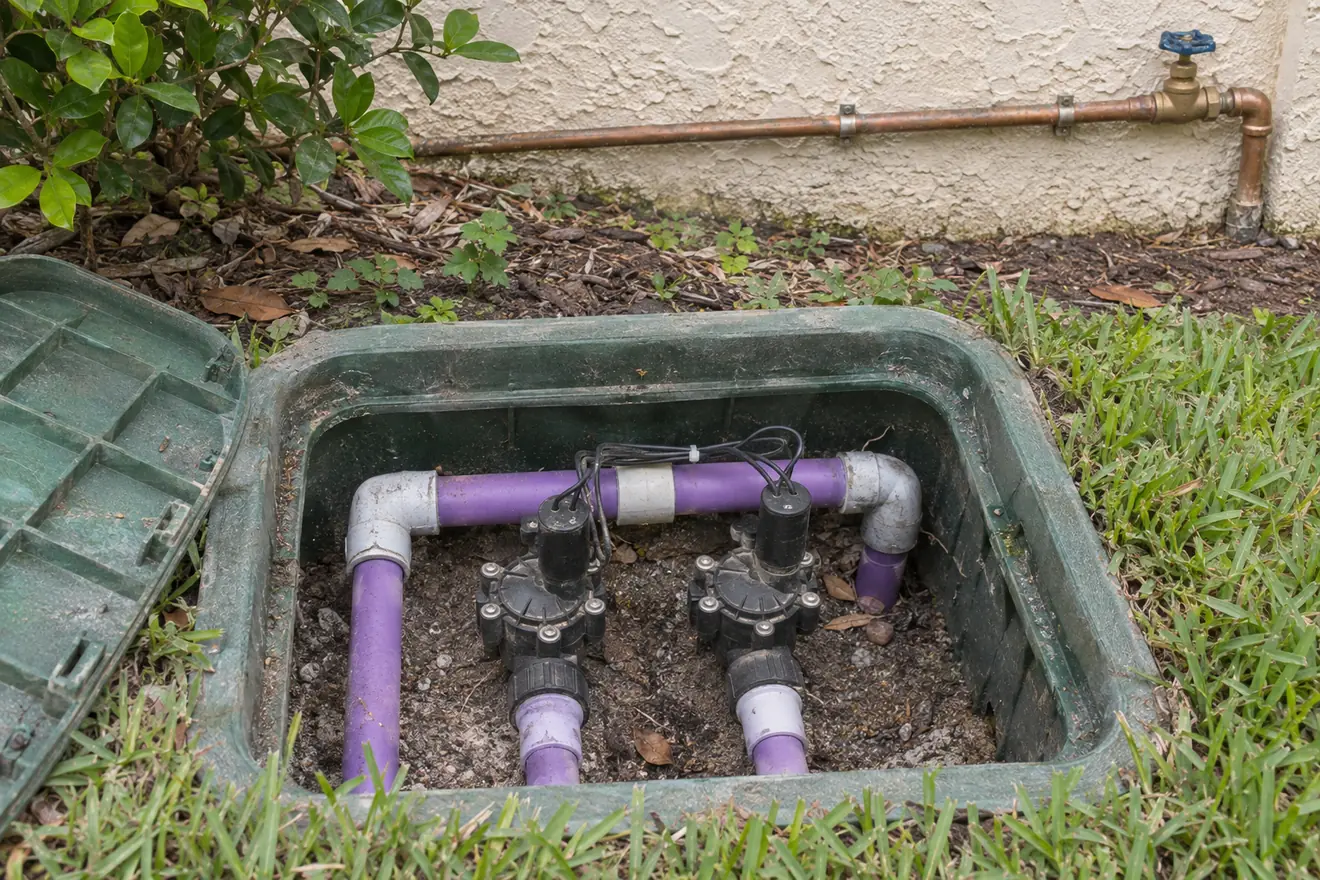
Purple pipe is the standard color code for reclaimed water in Florida: underground reclaimed lines that are not metal or concrete must be Pantone Purple 522C, and purple sprinkler parts, valve-box lids and "Do not drink" tags usually mark a reclaimed irrigation system at a home. Color alone should never be trusted, though. Reclaimed water and drinking water plumbing must never be connected, and the drinking water service needs backflow protection in case a mistake happens. Reclaimed irrigation water is not drinking water, and its look or smell cannot show that a tap is safe.
How to recognize reclaimed water at a home
Purple is the color code for reclaimed water. Under FDEP's Rule 62-610.469, underground reclaimed pipe that is not metal or concrete has had to be colored Pantone Purple 522C since January 1, 1996, metal and concrete pipe must use purple as the predominant color, and visible above-ground parts of the system must be clearly color coded or marked. Check for purple parts and warning tags before you open a valve, dig or repair anything.
There is a catch. The rule recommends, but does not require, color coding of pipes and sprinklers on private and residential property, and it does not require residential parts to use that specific Pantone shade. An older or homeowner-installed irrigation system may therefore use ordinary white pipe. A missing purple part does not prove that a line carries drinking water.
Valves and outlets must be tagged or labeled "Do not drink" in English and Spanish with the international symbol; UF/IFAS describes the labels as "Do not drink" and "No beber." Keep labels visible and ask the utility to replace missing ones. For the treatment behind those warnings, see what reclaimed water is and how it is treated.
Signs your home may have reclaimed water
Several clues, taken together, suggest an irrigation system is on a reclaimed supply. None of them is proof on its own, so use them to ask the right question rather than to settle it.
- Purple sprinkler heads, purple or purple-marked valve-box lids, or purple pipe visible in the yard.
- Tags or labels reading "Do not drink" and "No beber" on valves, outlets or enclosures.
- An irrigation line that is separate from the house plumbing and has no hose spigot attached to it.
If you are unsure, ask the utility to confirm what your service address receives. Availability by address, and how a new connection works, is covered in the guide to getting reclaimed water service.
What a cross-connection is
A cross-connection is any physical link through which nonpotable water could enter drinking water plumbing. It can be permanent, such as a pipe joining the two systems, or temporary, such as a hose or fitting that bridges them. Rule 62-610.469 is blunt: "No cross-connections to potable water systems shall be allowed." The same rule keeps reclaimed water out of any dwelling unit or building containing one, apart from narrow exceptions written into the rules.
The danger comes from backflow, which is water moving opposite its intended direction. A pressure drop in the drinking water system, or higher pressure on the reclaimed side, can push irrigation water into household taps. FDEP's cross-connection page notes that it is "virtually impossible to distinguish reclaimed water from drinking water by sight and scent," so nobody should taste water to identify its source. The same page says that when an area's existing wastewater lines are converted to carry reclaimed water, the utility must demonstrate that all existing connections will be eliminated.
Backflow protection on the drinking water side
Florida's drinking water rule, Rule 62-555.360, requires at least a dual check device on a residential drinking water service connection to a property that has reclaimed water. A dual check is acceptable only when no cross-connection is known on the premises, and it must be refurbished or replaced at least once every 5 to 10 years. Utilities may require a more protective device, and some test devices on their own schedule.
Hose bibs, pools and other rules
Rule 62-610.469 generally does not allow above-ground hose bibs on reclaimed water systems. Where hose connections exist, they must be in locked, labeled vaults or compartments, or be bibs that open only with a special tool in enclosures labeled as nonpotable. Some utilities go further and ban spigots on residential reclaimed lines entirely. Rule 62-610.469 also states that reclaimed water "shall not be used to fill swimming pools, hot tubs, or wading pools," and pool chemicals do not change that.
| Situation | Do | Do not |
|---|---|---|
| Unidentified outlet | Ask the utility to identify it | Drink from it or attach a hose |
| Reclaimed hose connection | Keep it dedicated, labeled and locked if required | Move a hose between reclaimed and drinking water outlets |
| Pool, hot tub or wading pool | Fill it from the drinking water supply | Fill or top it up with reclaimed water |
| Irrigation or plumbing repair | Confirm which supply a pipe carries before reconnecting | Join a drinking water line to the irrigation system |
| Renovation or new trench | Tell every contractor the property has two supplies | Reconnect a buried pipe based on its size or location |
| Backflow device | Keep it accessible for testing | Remove, bypass or bury it |
In public rights-of-way, Rule 62-610.469 also requires at least three feet of horizontal separation between reclaimed lines and drinking water mains or sewer lines; on private property it recommends the same. The full text of the rule is available from Cornell's Legal Information Institute.
Children, pets and play
Treat reclaimed sprinklers as irrigation equipment, not a water toy. Keep children from drinking the spray or playing in it, fill pet bowls from a known drinking water tap, and keep toys and drinking containers out of the spray zone. Rules differ by utility: Seminole County Utilities, for example, prohibits playing in sprinklers and other water-contact play, washing pets or vehicles with reclaimed water, and connecting it to household plumbing. UF/IFAS advises washing hands with potable water after contact. For the safety questions people ask most, see myths and facts about reclaimed water safety; questions about food plants are covered in the guide to reclaimed water and vegetable gardens.
What inspectors check
Utilities must inspect their reclaimed water service areas when customers first connect and periodically afterward under a cross-connection control program. The purpose, in FDEP's words, is to verify proper connections and minimize cross-connections, which in practice means checking that the irrigation system is fed only by reclaimed water, that no drinking water line is tied into it, and that outlets, markings and backflow protection are in order. FDEP also says utilities must inform users about the water's origin, characteristics and use limitations, because informed users are less likely to create cross-connections. Seminole County, as one example, inspects yearly and requires backflow devices to be tested annually.
The checks find real problems. In FDEP's 2025 Reuse Inventory, published in August 2026, 11 of 382 reuse systems reported identifying and eliminating one or more cross-connections, and 32,353 of 33,447 new connections (96.7%) were inspected to make sure no cross-connection had been created. Tell the utility about later plumbing or irrigation work.
If you suspect a cross-connection
- Stop drinking or cooking with tap water that tastes, smells or looks unusual, and use bottled or known-safe water.
- Contact your utility promptly through the contact details on its website and describe the problem and any recent plumbing or irrigation work.
- Do not try to fix it by flushing or boiling, and do not reconnect anything yourself.
- Wait until the utility clears the system before using the taps again, and follow its repair instructions.
Requirements vary, so confirm them with your utility before changing any plumbing. Rules for when and how often to run a reclaimed irrigation system are in the guide to watering with reclaimed water.
Frequently Asked Questions
What color is reclaimed water pipe?
Purple, specifically Pantone Purple 522C for underground pipe that is not metal or concrete. Metal and concrete pipe must have purple as the predominant color. On private residential property the rule only recommends purple, so some home systems use other colors.
Does a purple sprinkler mean the water is safe to drink?
No. Purple marks reclaimed water equipment, and reclaimed irrigation water is not drinking water. Never drink from its outlets or sprinkler spray, and keep children and pets away from it.
Is every reclaimed water line purple?
No. Because residential color coding is only recommended, an older or homeowner-installed irrigation line may be white or another color. If you cannot tell what a pipe carries, ask the utility instead of guessing from color or size.
How do I know if I have reclaimed water?
Look for purple parts and "Do not drink" tags on the irrigation system, then ask your utility to confirm what your address receives. Purple parts are a strong clue, but only the utility can confirm the supply.
Can a garden hose create a cross-connection?
Yes. A hose or fitting that links the two systems creates a temporary pathway for backflow. Never move a hose between a reclaimed outlet and a drinking water outlet or join them with a connector.
Does a backflow device make a connection between the systems acceptable?
No. The dual check or other device on the drinking water service is a safety net in case of a mistake. Cross-connections remain prohibited under Florida's reuse rules.
Can reclaimed water fill a small wading pool?
No. Florida's rule says reclaimed water shall not be used to fill swimming pools, hot tubs or wading pools. Use the drinking water supply for anything people sit or play in.