The biggest water savings in most Florida homes come from the sprinkler system: water only when the lawn shows stress, keep the rain sensor working and fix broken heads. Indoors, the quickest wins are fixing leaks, especially running toilets, and replacing old toilets, showerheads and faucets with WaterSense labeled models. A Florida-Friendly yard then keeps the savings going with less irrigation, fertilizer and runoff.
Where the water goes in a typical home
According to EPA's WaterSense water-use overview, the average American family uses more than 300 gallons of water a day at home, roughly 70 percent of it indoors and 30 percent outdoors. Outdoor use is higher in drier regions, and in Florida the outdoor share is the one to watch: the Suwannee River Water Management District says landscape irrigation is the largest part of household use in the state. So the order of attack is simple: sprinklers first, then leaks, then fixtures and appliances.
Start outdoors: irrigation habits
The Suwannee River Water Management District states that "landscape irrigation accounts for the largest percentage of household water use in the State of Florida." That makes the irrigation controller the most important water fixture in many homes. UF/IFAS's "Watering Your Florida Lawn" recommends watering as needed, when the grass shows stress: leaf blades folded lengthwise, a blue-gray tint, or footprints that stay visible.
- Apply 1/2 to 3/4 inch per watering, then wait for stress signs before watering again.
- Measure each zone with straight-sided cans for 15 minutes; if they collect 1/4 inch, the zone needs 30 to 45 minutes.
- Water in the early morning and keep spray off driveways and sidewalks.
- Reset the timer with the seasons; UF/IFAS warns that failing to adjust for the seasons usually leads to overwatering.
- Turn the system off when rain does the job. Most of Florida averages 50 inches or more of rain a year.
Your watering days and hours are set by your district and local government; the guide to lawn watering restrictions explains how to find them. Water management districts also publish conservation programs and rebate information, and the guide to Florida's water management districts shows which one covers your county.
Fix the hardware, not only the schedule
EPA says a poorly maintained automatic irrigation system can waste up to 25,000 gallons a year, and that as much as 50 percent of the water used outdoors is lost to wind, evaporation and runoff from inefficient irrigation. Hardware matters as much as timing. When system pressure is higher than a nozzle is designed for, EPA's page on spray sprinkler bodies notes it causes excessive flow, misting and uneven coverage. WaterSense labeled pressure-regulating sprinkler bodies hold the pressure steady at the nozzle; for a household using 50,500 gallons outdoors at or above 60 psi, EPA estimates savings of nearly 5,600 gallons a year.
Controllers, sensors and the state rule
Section 373.62 of the Florida Statutes requires anyone who installs an automatic landscape irrigation system to properly install, maintain and operate technology that stops the system during periods of sufficient moisture, and it requires licensed contractors who work on such systems to test those devices and repair or replace missing or faulty ones. In practice this is the "Florida rain sensor law": a rain sensor (or an equivalent soil moisture device) has to be on the system and working. A rain sensor that has been unplugged or bypassed does nothing, so test it now and then.
Smarter controllers go further. EPA's WaterSense program explains that weather-based controllers use local weather and landscape conditions to set schedules, while soil moisture-based controllers prevent irrigation when water is not needed. EPA estimates that replacing a standard clock-based controller with a WaterSense labeled controller can save an average home up to 15,000 gallons a year, a reduction of up to 30 percent of irrigation use.
Indoor fixtures and the WaterSense label
| Fixture | WaterSense limit | EPA's savings estimate |
|---|---|---|
| Toilet | 1.28 gallons per flush or less, 20% below the federal standard of 1.6 | Nearly 13,000 gallons a year for the average family replacing old toilets |
| Showerhead | No more than 2.0 gallons per minute | Showering is nearly 17% of indoor residential use, so flow matters |
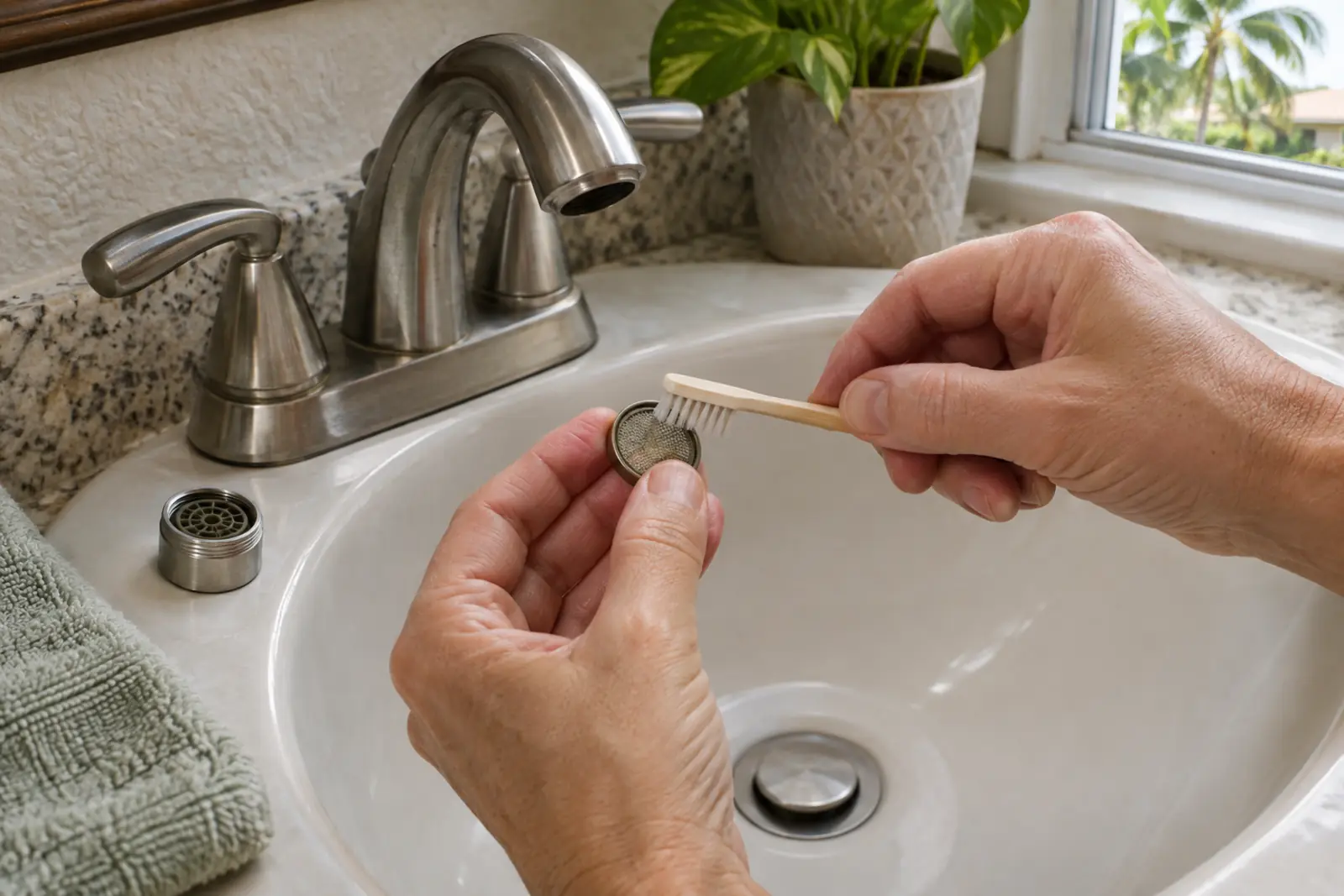
| Bathroom faucet or aerator | No more than 1.5 gallons per minute, versus the standard 2.2 | About 700 gallons a year for the average family |
For showerheads the comparison is a standard 2.5 gallons per minute against the WaterSense maximum of 2.0, which EPA says saves the average family about 2,700 gallons a year and more than 330 kilowatt-hours of electricity for heating water. Many utilities offer rebates on labeled fixtures or irrigation upgrades; check your utility's website before you buy.
Appliances and daily habits
Fixtures are only part of indoor use. A few habits and appliance choices add up:
- Run the dishwasher only when it is full. EPA puts the saving at nearly 320 gallons a year.
- Turn the tap off while brushing teeth or shaving. EPA says this saves about 8 gallons a day when brushing teeth and 10 gallons per shave.
- Choose an ENERGY STAR clothes washer when yours wears out. ENERGY STAR says full-size certified washers use 14 gallons per load against 20 gallons for a standard machine, about 30 percent less water.
- Wash full loads of laundry and dishes rather than several partial ones.
Find and fix leaks
EPA's Fix a Leak Week page says the average household's leaks can waste more than 9,300 gallons a year, that nine percent of homes have leaks wasting 50 gallons or more per day, and that fixing easily corrected leaks can save about 10 percent on water bills. EPA runs Fix a Leak Week every March (March 16-22 in 2026), but these checks work any time:
- Read the meter twice. Note the reading, use no water for two hours (irrigation off too), then read it again. Any change suggests a leak.
- Dye-test toilets. Put a few drops of food coloring in the tank; if color appears in the bowl within 10 minutes without flushing, the flapper or valve is leaking. Flush afterward to avoid staining.
- Look at winter bills. EPA says a family of four using more than 12,000 gallons a month in a cool month may have a serious leak.
- Check fixtures and pipes. Look for drips at faucets and showerheads and moisture at pipe fittings.
- Watch the sprinklers run. Broken heads, geysers, bubbling soil and soggy spots between cycles point to irrigation leaks.
If your irrigation runs on a separate reclaimed water service, check that system on its own; the drinking water meter will not show its leaks.
Florida-Friendly Landscaping in practice
The UF/IFAS Florida-Friendly Landscaping program, supported in part by FDEP, is built on nine principles:
- Right Plant, Right Place: match plants to sun, soil, space and moisture so they need little extra water.
- Water Efficiently: irrigate by need and keep equipment in repair.
- Fertilize Appropriately: feed only what plants need, following local ordinances.
- Mulch: cover bare soil to hold moisture and limit weeds.
- Attract Wildlife: include plants that give food and shelter.
- Manage Yard Pests Responsibly: identify the problem before treating it.
- Recycle Yard Waste: turn clippings and leaves into mulch or compost.
- Reduce Stormwater Runoff: help rain soak in, for example by aiming downspouts at beds or into a rain barrel.
- Protect the Waterfront: keep fertilizer and clippings away from ponds, canals and lakes.
Rain itself is free irrigation: UF/IFAS estimates that about 600 gallons can be collected for every inch of rain on 1,000 square feet of roof. The guide to rain barrels and stormwater ponds explains how to capture some of it. Growing food at home? The guide on using reclaimed water on a vegetable garden covers what is and is not advised.
Florida Water Star certification
Florida Water Star is a voluntary certification for homes that use less water. According to the program's website, it is run by the St. Johns River Water Management District with the South Florida and Southwest Florida districts and the Florida Green Building Coalition, and it covers indoor fixtures and appliances, landscape design and irrigation systems. The program says certified homes can save up to 6,000 gallons a year indoors and up to 42,000 gallons a year outdoors. Some local governments have built it into their codes, so ask yours whether it applies to new construction. See the Florida Water Star program for details.
HOAs and Florida-friendly yards
Section 373.185 of the Florida Statutes defines Florida-friendly landscaping as quality landscapes that conserve water, protect the environment, are adaptable to local conditions and are drought tolerant, and it says a deed restriction or covenant may not prohibit, or be enforced so as to prohibit, a property owner from implementing it; the same applies to local ordinances. Associations can still review plans, so show how your design follows the principles.
A one-page checklist
| Check | How often | Action |
|---|---|---|
| Controller schedule | Each season | Match run times to rainfall and plant stress |
| Rain or soil moisture sensor | Twice a year | Test that it actually stops the system |
| Sprinkler heads and coverage | Monthly in the growing season | Fix broken heads, overspray and dry spots |
| Toilets | Twice a year | Dye test; replace worn flappers |
| Water meter | When a bill jumps | Two-hour no-use test |
| Fixtures | At replacement time | Choose WaterSense labeled models |
| Landscape | When replanting | Right plant, right place; add mulch |
Reclaimed water saves drinking water, but it is not unlimited; Orange County Utilities, for one, urges reclaimed customers to water efficiently and use mulch and rain sensors. The guide to watering with reclaimed water applies the same habits to purple-pipe systems, getting reclaimed water service explains availability and cost, and reclaimed water myths and facts answers the common safety questions.
Frequently Asked Questions
What saves the most water in a Florida home?
Usually the irrigation system, because landscape irrigation is the largest share of household water use in Florida according to the Suwannee River Water Management District. Watering only when the lawn shows stress, fixing broken heads and keeping a working rain sensor make the biggest difference.
How can I tell if my house has a leak?
Read the water meter, use no water for two hours and read it again; EPA says any change suggests a leak. Food coloring in the toilet tank that reaches the bowl within 10 minutes reveals a leaking flapper.
Is a rain sensor required by law in Florida?
Section 373.62 of the Florida Statutes requires anyone who installs an automatic landscape irrigation system to install, maintain and operate technology that stops the system when there is enough moisture, such as a rain sensor. Licensed contractors who work on these systems must test the devices and repair or replace missing or faulty ones. Local rules may add requirements.
How much water does an average household use?
EPA says the average American family uses more than 300 gallons a day at home, about 70 percent indoors. Your own figure depends on lawn size, pool, household size and leaks; your utility bill and meter show the real number.
Do WaterSense fixtures really save water?
Yes. WaterSense toilets use 1.28 gallons per flush or less, showerheads no more than 2.0 gallons per minute and bathroom faucets no more than 1.5. EPA estimates that an average family replacing old toilets saves nearly 13,000 gallons a year.
Can an HOA ban a Florida-friendly yard?
Under section 373.185 of the Florida Statutes, deed restrictions and covenants may not prohibit a property owner from implementing Florida-friendly landscaping. Associations can still review plans, so show how your design follows the nine principles.
Should I still conserve if I irrigate with reclaimed water?
Yes. Reclaimed supplies can run short in dry seasons, some utilities set reclaimed watering days, and overwatering harms lawns and adds nutrients to ponds. Water by need, just as you would with drinking water.