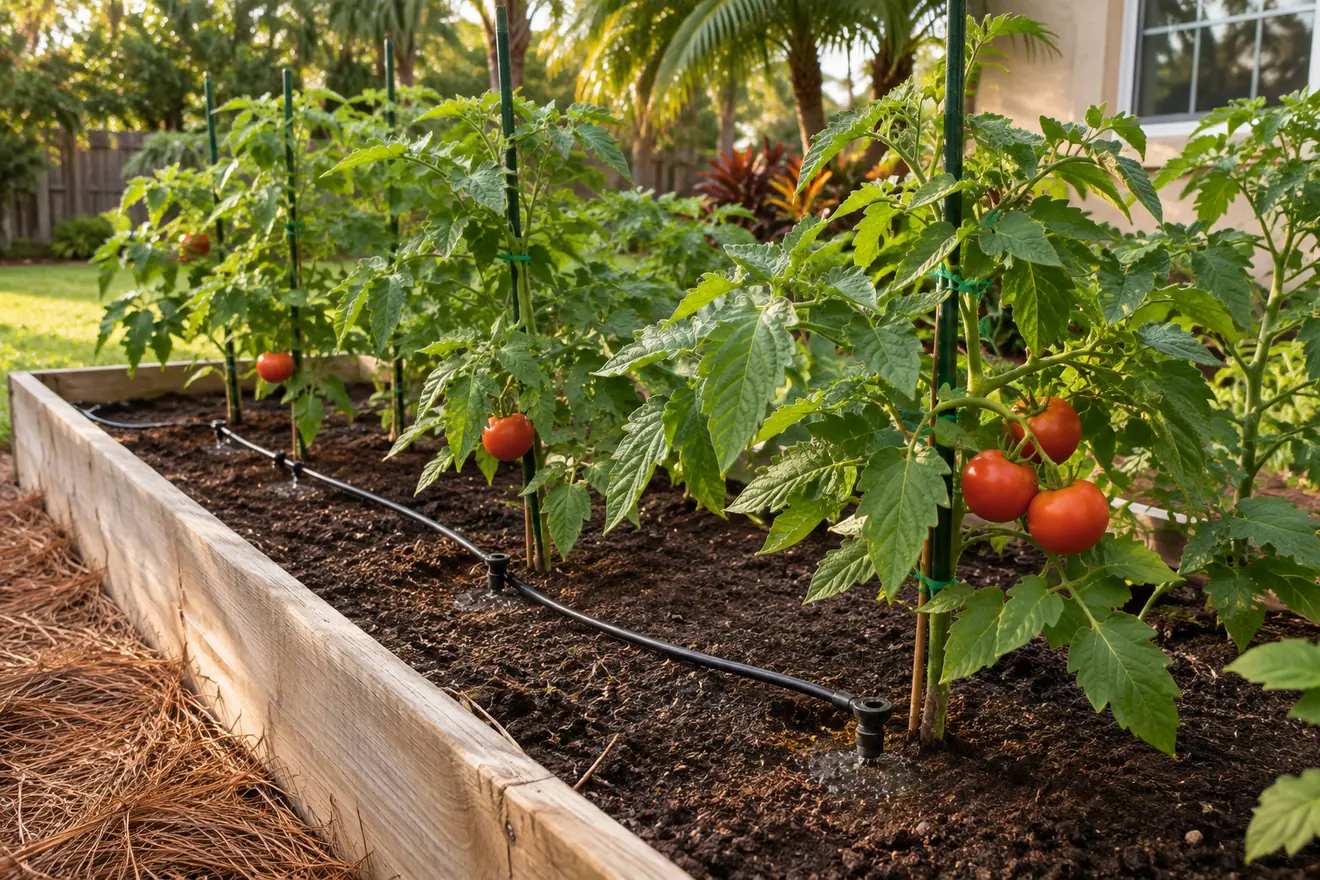
Yes, with limits. Florida's rule allows reclaimed water on edible crops that will be peeled, skinned, cooked or thermally processed before eating, even when the water touches the crop. For crops eaten raw, the rule allows only indirect irrigation, such as drip or subsurface lines, that keeps water off the edible part. UF/IFAS advises home gardeners to go further and use drinking water for vegetables and herbs eaten fresh, and your utility may have its own conditions.
What Florida's edible-crop rule says
Rule 62-610.475 of the Florida Administrative Code, last amended effective April 1, 2021, sorts crops by how they will be prepared and whether reclaimed water touches them. It allows irrigation, including direct contact, of edible crops that will be peeled, skinned, cooked or thermally processed before consumption, and it expressly allows irrigation of citrus and tobacco.
For edible crops that will be eaten without those steps, the rule permits only indirect methods that prevent direct contact, such as ridge and furrow irrigation, drip irrigation or subsurface distribution. Spraying or otherwise applying reclaimed water directly to those raw-eaten crops is prohibited.
| How the crop will be eaten | Spray or direct contact | Drip, furrow or subsurface |
|---|---|---|
| Peeled, skinned, cooked or thermally processed | Allowed by the state rule | Allowed by the state rule |
| Eaten raw without those steps | Prohibited | Allowed only if the edible part stays dry |
The test is actual contact, not the equipment's name. A drip emitter that wets a leaf or splashes soil onto low-growing produce does not keep the food dry.
Most edible-crop reuse in Florida is commercial. FDEP's 2025 Reuse Inventory, published in August 2026, counted about 2,927 acres of edible crops irrigated by 156 reuse systems, farmland that has historically been mostly citrus.
Why UF/IFAS is more cautious for home gardens
The 2023 UF/IFAS publication Reclaimed Water in Your Florida-Friendly Edible Landscape explains that reclaimed water is clean, clear and usually odorless but still contains salts, nutrients and pathogens, and that it must never be used for drinking or sanitary purposes. It quotes FDEP's guidance that reclaimed water should not be applied directly to the surfaces of vegetables or other edible crops that are not peeled, cooked or thermally processed.
The publication accepts indirectly irrigated produce as safe to eat raw when the water never touches the edible part. Its closing advice to home gardeners is stricter: do not eat raw vegetables from a garden irrigated with reclaimed water, and treat cooked or peeled edibles as the safe choice. The reason is practical. In a crowded backyard bed it is hard to keep every leaf dry, and lettuce, thyme and oregano are named as crops better watered with potable water because of salt sensitivity or the difficulty of avoiding the leaves.
A simple household rule follows from that: water anything you plan to eat raw with drinking water, and use reclaimed water only where both the irrigation method and the kitchen plan fit the guidance. For background on why clear water is not drinking water, see how reclaimed water is treated.
A crop-by-crop guide
Choose the water source by how your household actually eats the harvest. If one bed feeds both the stove and the salad bowl, use drinking water. The UF/IFAS publication's table, summarized:
| Crop or use | UF/IFAS guidance |
|---|---|
| Leafy greens and herbs that will be cooked | Acceptable to irrigate directly |
| Root vegetables | Acceptable to irrigate directly when peeled or cooked |
| Fruit trees | Acceptable to irrigate directly when the fruit is peeled or cooked |
| Pineapple | Acceptable to irrigate directly when peeled |
| Leafy greens, herbs and lettuce eaten raw | Do not irrigate directly; use potable water |
| Strawberries and edible flowers | Do not irrigate directly |
UF/IFAS also notes that salt-tolerant fruit trees and shrubs can be irrigated with reclaimed water through drip, furrow or subsurface methods. Keep spray off fruit you would eat unpeeled.
Salts, nutrients and fertilizer
A crop can satisfy the rule and still struggle, because salts in reclaimed water can damage leaves, reduce germination and rooting, and make it harder for roots to take up water. UF/IFAS says salt levels above 1,000 parts per million are too high for most crops. It lists bell peppers, broccoli and loquats as highly salt tolerant; cauliflower, peas, squash and sweet corn as moderately tolerant; and beans, celery and cucumbers as having low salt tolerance. Good drainage helps, and extra watering is not a cure for salt stress in poorly drained beds.
Most reclaimed water also carries nitrogen and phosphorus. Those nutrients can reduce how much fertilizer a garden needs, but levels vary by source, so ask your provider for water-quality information before cutting back. The page on watering a yard with reclaimed water covers salts and fertilizer for lawns and shrubs.
Setting up a garden on reclaimed water
Check your utility's conditions before planting. Some add their own rules: Orange County Utilities, for example, requires in-ground sprinkler systems for reclaimed irrigation, does not allow hoses or spigots on residential reclaimed lines, and calls for drip irrigation on crops eaten raw, while Seminole County Utilities permits irrigation of fruit trees and edible gardens when the food is peeled or cooked before eating.
- Use drip, furrow or subsurface lines wherever reclaimed water must stay off the edible part.
- Recheck emitters and wetting patterns as plants grow into the water's path.
- Keep a separate, clearly identified drinking-water hose for raw-eaten crops and for washing.
- Keep reclaimed outlets labeled and fully separate from household plumbing, as explained in the guide to purple pipes and cross-connections.
| Do | Do not |
|---|---|
| Use drinking water for salad crops and fresh herbs | Spray reclaimed water on leaves eaten raw |
| Check where irrigation actually lands | Assume every drip setup prevents contact |
| Wash hands and produce with drinking water | Use a purple outlet for kitchen or hand washing |
| Peel or cook produce that reclaimed water touched | Treat a quick rinse as a substitute for peeling or cooking |
Wash your hands with drinking water after any contact with reclaimed water, including sprinkler repairs, and wash harvested produce the same way. Washing does not replace peeling or cooking when reclaimed water has touched the food.
Frequently Asked Questions
Can reclaimed water be used on lettuce?
Not by spraying or any method that wets lettuce eaten raw. Florida's rule allows only indirect methods that keep the leaves dry, and UF/IFAS recommends drinking water for lettuce and other fresh-eaten crops because keeping leaves dry is difficult.
Is drip irrigation enough to make reclaimed water suitable for vegetables?
Drip counts as an indirect method only if it truly keeps water off the edible portion. UF/IFAS still advises home gardeners to use drinking water for vegetables eaten raw. Check your utility's rules as well.
Can fruit trees receive reclaimed water?
Yes, within your utility's rules. UF/IFAS says salt-tolerant fruit trees and shrubs can be watered through indirect methods, and direct irrigation is acceptable when the fruit will be peeled or cooked. Citrus is expressly allowed under the state rule.
Does reclaimed water replace garden fertilizer?
Not completely, but it can reduce how much you need, because most reclaimed water contains nitrogen and phosphorus. Levels vary by source, so ask your provider for water-quality information before changing fertilizer amounts.
Can washing make sprayed vegetables safe to eat raw?
No. Washing is not a substitute for peeling or proper cooking when reclaimed water has touched the edible part. For anything you plan to eat raw, use drinking water for irrigation and for washing.